On Disintegration

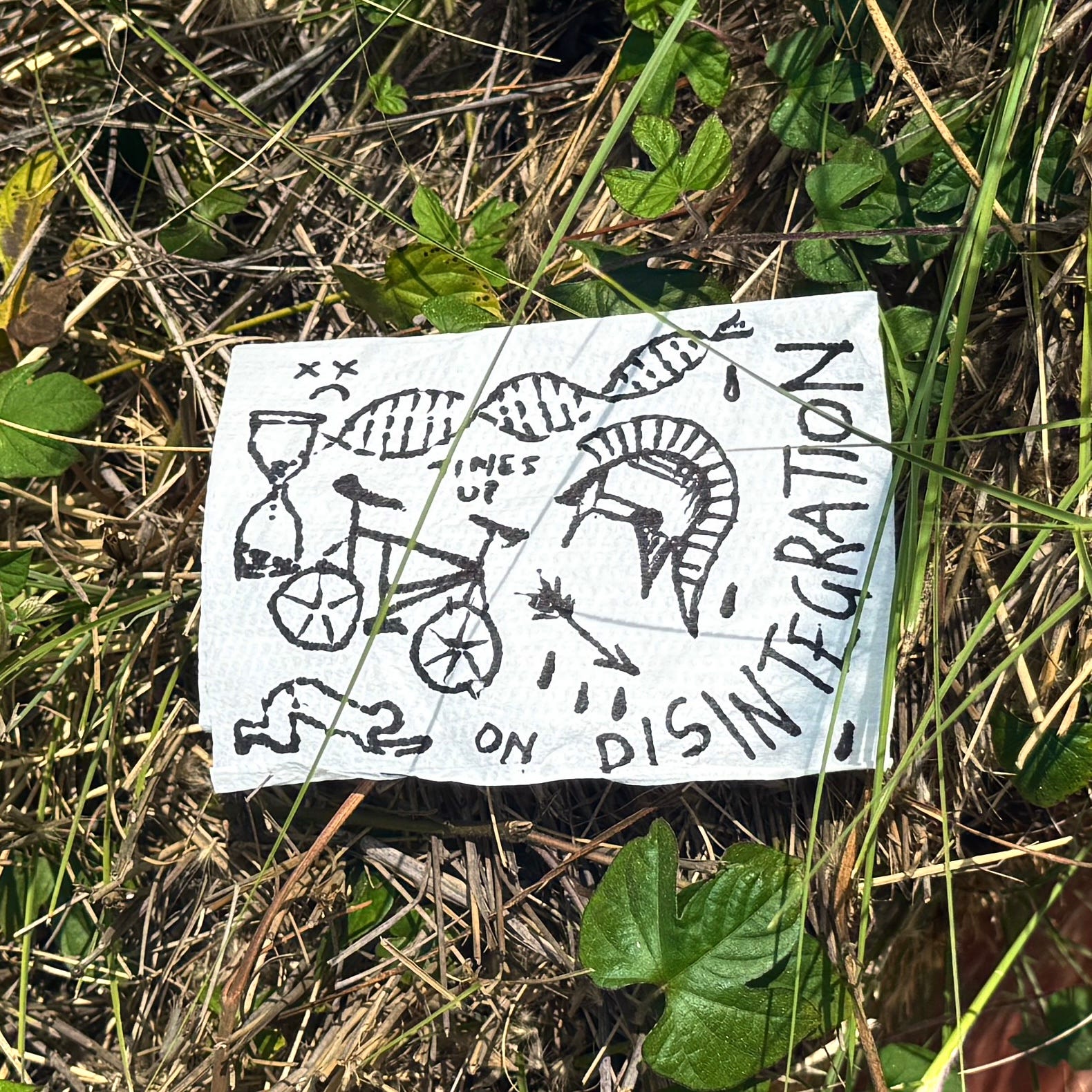
Disintegration is always on my mind. The irreversible, slow march towards the inevitability of the end—an absolute obliteration whose remains are no longer even kin to the thing it once was. It is violence of a most crude and calculable nature. It is the countdown clock that begins at the start of every moment of art, every performance, every sunrise, every birth. It is interwoven in our DNA, in the DNA of all things. Impermanence is the nicer way of saying it. We are not permanent. Nothing is. Yet I have spent my whole life trying to create things that will outlast me, tying myself to a forged legacy whose existence will outlast my own. The perpetual motion of my curated self to live on for all time.
I keep thinking of the 2004 film “Troy,” starring the comically buff duo of Brad Pitt and Eric Bana. I’ve probably seen this movie 30 times. (I do this with terrible movies.) One thing that has always struck me about this film is the strange benevolence paid to impermanence, which seems at once a miraculously poetic throughline and baffling plot device. Brad Pitt, who plays the tragic Greek character Achilles, fantasizes about his death and legacy throughout the film. In fact, he is actively pining for it. It is the single reason he has agreed to join Agamemnon in his siege of Troy. “If you go to Troy,” Thetis, Achilles’s mother, says on the eve of his departure, “they will write stories about your victories for thousands of years.” Abdicating a potentially peaceful life on the remote island of Larissa with a family that could love him and care for him, Achilles choses legacy, and, in turn, death. A version of him will live on. It is too powerful a temptation for him, making his life seem almost inconvenient.
I think about this scene a lot: a mother pleading with her son to remain close to home and reject the dangers of the world, no matter what glory they may bring, while also urging his momentous departure and death. How many parents push their children to some intangible glory, knowingly putting them in harm’s way? Is it for him or for her?
My father taught me how to ride a bike by letting me fall. Over and over again I would get it going, trading fear for reckless abandon, and ride the momentum of those two wheels speeding down the drive. I would fall, skin my knees, elbows—all signs the body gives to warn of impending, irreparable harm. But again, at his insistence, I would mount the bike for another try. There would be plenty more skinned knees and elbows as I tested the limits of my ability again and again throughout my life, pushing the proverbial bicycle faster and faster with more and more of that learned recklessness. He was always proud—and later, maybe even a little jealous—never failing to remind me of his indispensability to my eventuality. It was a shared glory, much like it must have been for Achilles’s mother, tinged with a darkness, indeed a recklessness. Like the bicycle. A recklessness of care. In the end, as Brad Pitt lay dying with Paris’s arrow piercing his foot through the tendon that would come to bear his name, he would have preferred the love of Briseis instead.
We are disintegrating. Constantly. Some of it is unavoidable. But much of it is of our own making, or at the urging of others, of the world: all of it a different kind of unavoidability. Would I have asked my father for something else in those moments if I’d had the means to know what to ask for? Or is my role simply to be thankful for the bravery born of that recklessness—the intangible gift of the endless skinned knee? What we learn sailing down the drive on a bike is to demand of the world what seems impossible. That we have a stake in our own disintegration. Or is it all just the illusion of control, the helmet strapped loosely to our heads?
Whoa. Really needed this, and love it. Impermanence, disintegrating, and recklessness. I’ve been thinking about these things without those words specifically in mind. Thank you for sharing!
Yeah, man. Love it. If you ain’t disintegrating, you ain’t living.